Prešeren square
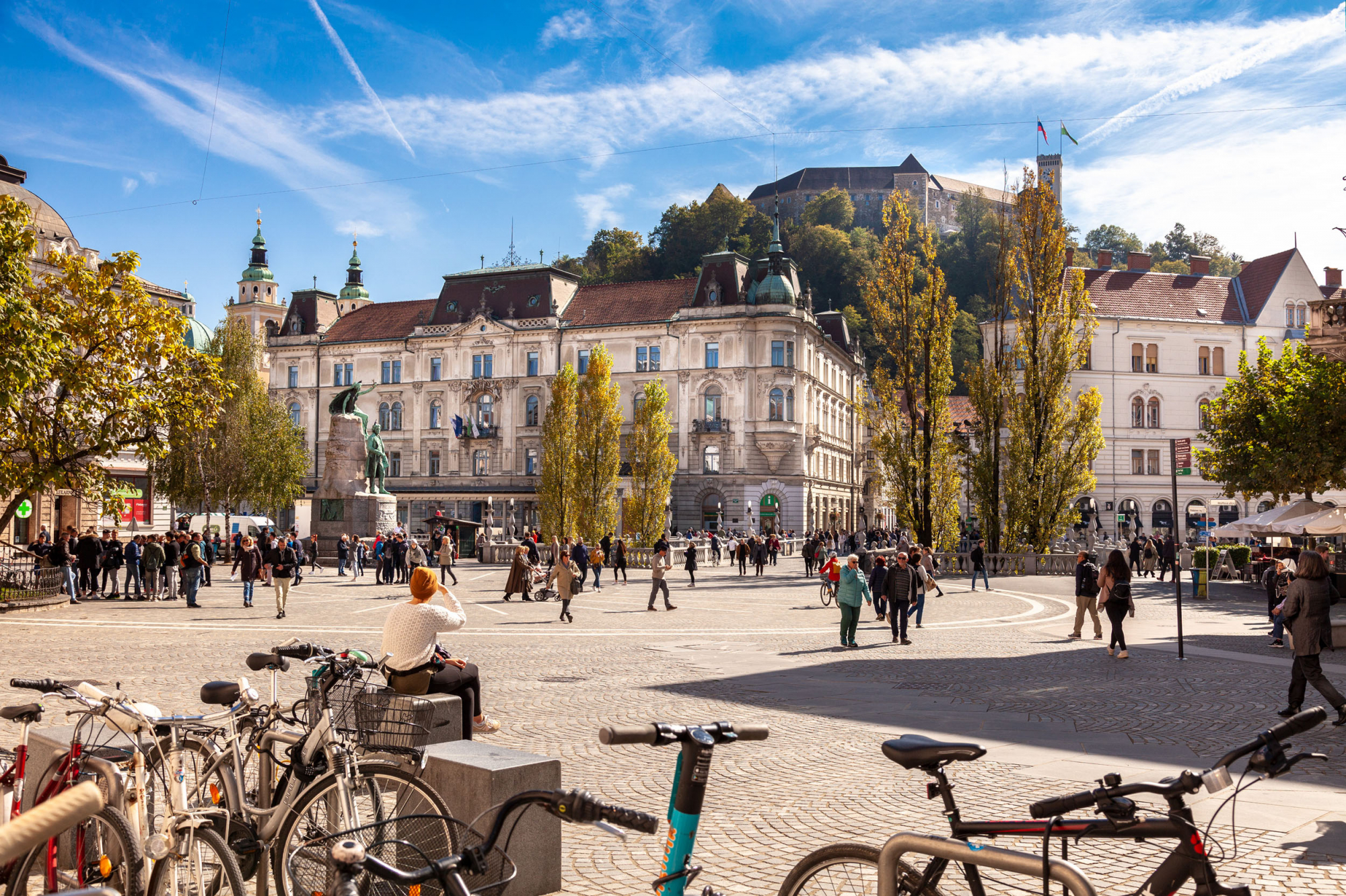
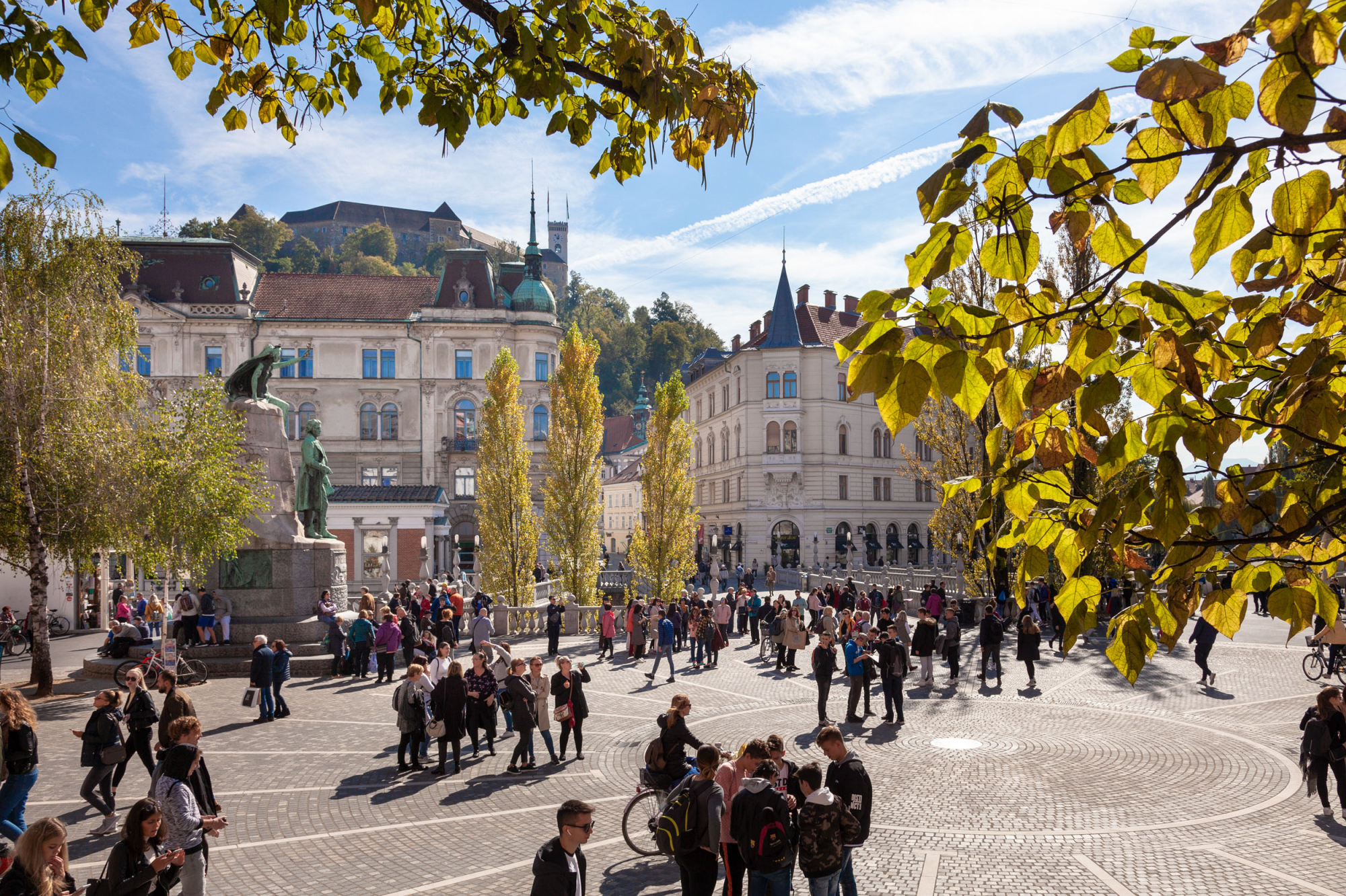
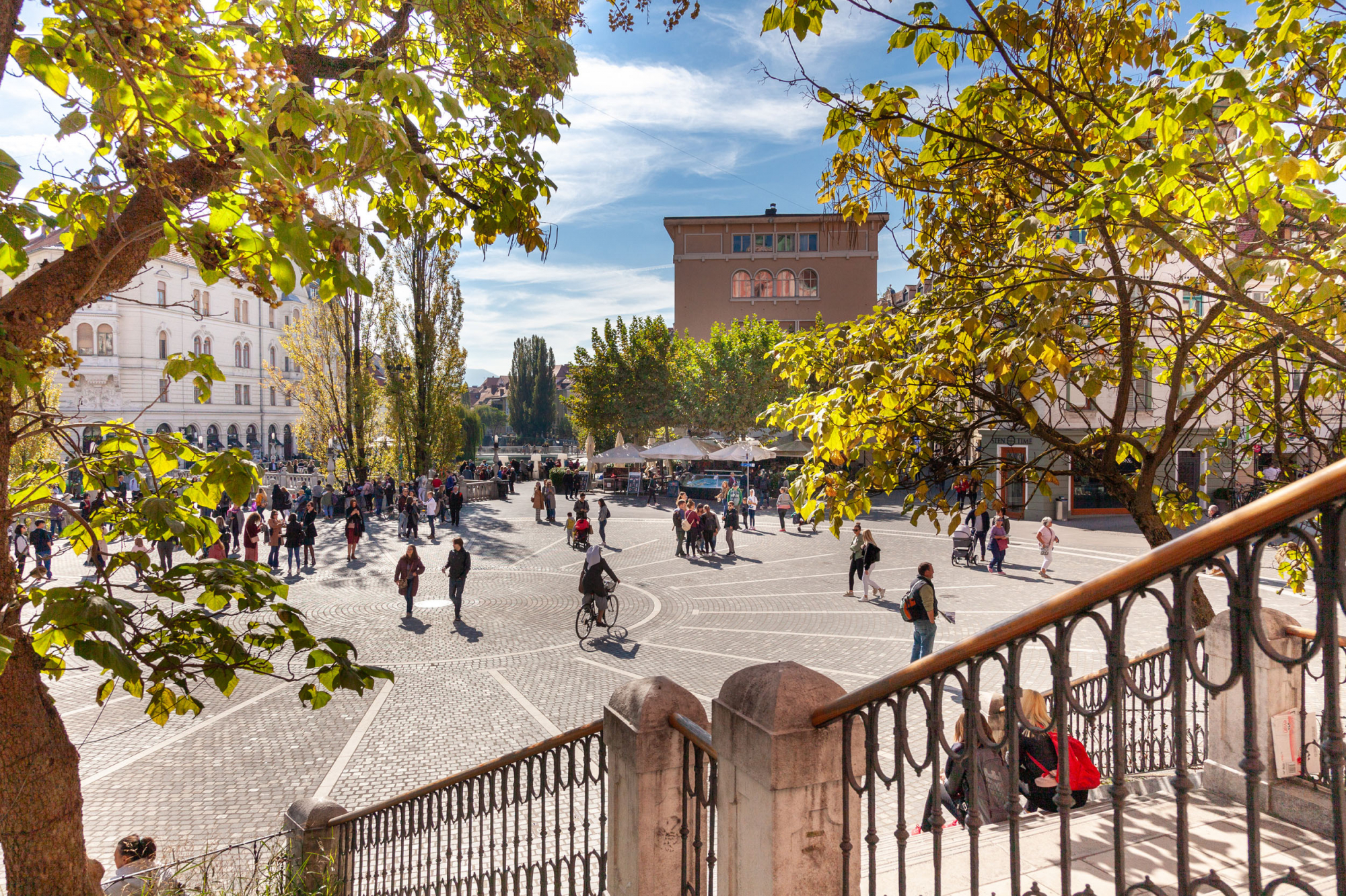
LjubljanaPrešeren Square (popular photo location and meeting point) is one of the most famous locations of the city - the green European capital Ljubljana, is the center of lively events full of crowds and tourists in all seasons (especially in the festive December), which converges five streets that merge into a Plečniks triple bridge (at the transition to the old town).
Being on Prešeren Square means having practically everything at your fingertips:
- the central market with four Plečnik arcades, complemented by restaurants and street food kiosks,
- the town hall also called the City Hall,
- the old town center,
- access to a boat for transport on the Ljubljanica River ,
- Ljubljana Castle-medieval fortress with funicular,
- Dragon Bridge-bridge with famous dragon statues,
- Tivoli Park - large landscaped city park, Ljubljana Cathedral with Baroque architecture,
- National Museum of Slovenia,
- City Museum of Ljubljana, Museum of Recent History of Slovenia,
- Slovenian Ethnographic Museum,
- Moderna galerija Ljubljana,
- Railway Museum,
- AKC Metelkova - center with alternative music and art…
The location of Prešeren Square was already relevant in the Middle Ages, as trade took place here in the walled old town center - and in front of the city gates, trade flourished as early as the 16th century.
In 1895, Ljubljana was very marked by a great earthquake, which conditioned an extensive reconstruction. Prešeren Square was newly surrounded by famous palaces: the Fisch and Seunig House, the Central Pharmacy building, the Urbanc store, the Hauptmann House, the Mayer Palace, the Philip's Palace and the Kresija.
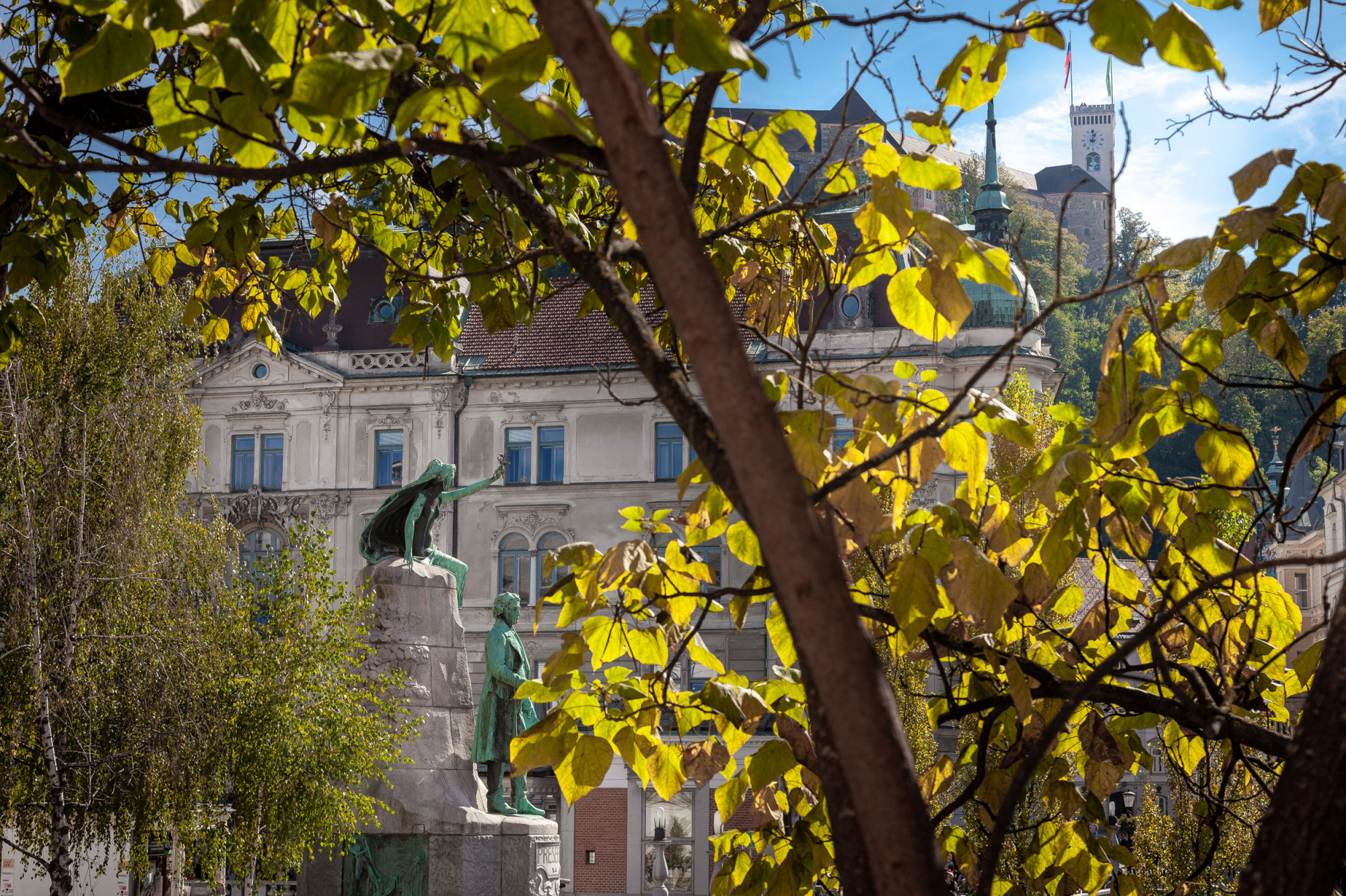
Prešeren Square is named after the greatest Slovenian poet France Prešeren (1800-1849). In his memory, a monument was erected in the center of the square in 1905, surrounded on all sides by famous architectural heritage - various burgher palaces and the Franciscan Church of the Annunciation and the unique architectural bridge Tromostovje, the work of the famous architect Jože Plečnik - his oeuvre marked Ljubljana, Vienna and Prague. His works are now on the UNESCO World Heritage List.
The central monument, the work of architect Max Fabiani and sculptor Ivan Zajc, depicts Prešeren and the naked muse of poetry holding a laurel branch in his hand. The statue of Prešeren faces the direction of Wolfova Street to the front of the house with a statue of his unrequited love Primič's Julia, to whom he dedicated the most beautiful sonnets.
The 7th stanza of Prešeren's poem Zdravljica is the national anthem of the Republic of Slovenia.